
A Street Photography Definition
Street photography is many things to many people, and I’m certainly not looking to open up an age old debate on it’s definition. So I will talk about what it is for me, personally. You may agree, you may not – but this is how I approach it. And apologies from the outset, this is definitely a longer read!
However, let’s start with a more formal definition. There’s many around but my favourite has to be one set out in the Magnum Photos book, ‘Streetwise – The Ultimate Collection of Street Photography‘ (Thames & Hudson, 2019) edited by Stephen Maclaren, in which he states:
“An art form that revels in the incongruous, the implausible, the inconsistent, and the ineffable. It celebrates ambiguity, hinting at parallel realities that we can only occasionally tune into, and then only for a fraction of a second.”
McLaren further elaborates that street photography is “more of a tradition than a genre“, about capturing everyday life with a keen eye for the unexpected and the poetic; whilst keeping to the tradition’s emphasis on observation, timing, and the ability to find meaning in the mundane.
He further portrays street photography as a fluid and interpretive practice, rooted in observation and spontaneity, and deeply embedded in the tradition of visual storytelling.
Let’s Talk About Focal Length At The Outset

So for me, street photography not about ticking off genre checklists or chasing likes—it’s about chasing moments. Raw, unscripted, fleeting moments that often disappear before they’ve even fully arrived. It’s about being out there with a camera—usually something small, discreet, and fixed with a focal length of 28mm to 50mm lens—ready to react when life throws up the unexpected. It’s why I use small and discreet Ricoh GRIII compact cameras with either a fixed 28mm or 40mm lens.
Anything longer than that feels like cheating. Longer lenses drift into voyeurism. Street photography, to me, is about being inside the scene—not lurking on the outside peeking in. You’re not a sniper; you’re a participant. A witness. You move through the same space as your subject, close enough to feel the tension, the humour, the rhythm of the moment.
Because the truth is, life does that a lot.
It’s Also Not About The Gear
Street photography isn’t about the latest mirrorless body, high-end glass, or how many pixels you can squeeze into a frame. And it’s not about the brand name on the camera. It’s never been about these things.
Some of the greatest street photos ever taken were shot on beat-up film cameras with light leaks and sticky shutters. What matters is not what you shoot with—it’s how you see. Your mindset, your timing, your ability to spot something that others walk past. That’s the real gear that counts.
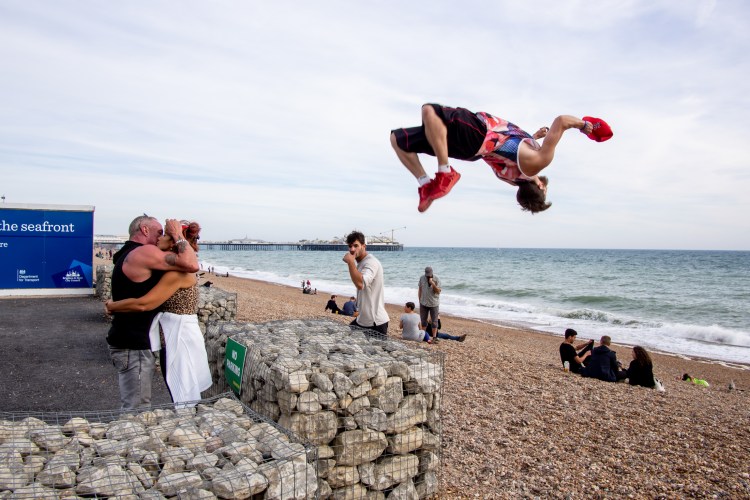
My most well-known and multi award-winning ‘Brighton Seafront’ (2016) image, shown above, was shot on a basic entry level Olympus Pen Lite E-PL5 camera with a 28mm lens. It’s been lauded by both Alex Webb and Colin Westerbeck, amongst others. No high end Leica was necessary for that!
As I always say, you never judge a chef by the oven he uses. The best camera for street photography is the one you have with you – whatever that is. The fabulous Jeff Mermelstein gets great shots on a camera phone.
Always Carry A Camera

If there’s one habit that’s changed the way I shoot, it’s this: always carry a camera. Not just when I think something might happen, but all the time. Because the best street photography moments never announce themselves.
They show up in split seconds—on your walk to the shop, while waiting for a coffee, during a detour you didn’t plan. If you don’t have a camera with you, you miss them. It doesn’t have to be fancy. Just something you’re comfortable with, and fast with. It becomes a part of your daily rhythm, like keys or your phone. And these days, nearly all of us has a camera phone on us, so there’s never an excuse.
My ‘Shadow Boxing’ (2010) image above was captured on my smartphone whilst on a family day out to the V&A Museum in London (yes I was even using smartphones in 2010 to capture street photography!)
It’s All About the Human Condition

At the heart of my street photography is a simple, unshakeable obsession: the human condition. I’m not just talking about photographing people (although they often feature). I mean capturing moments that speak to what it feels like to be human. The beauty, the strangeness, the sadness, the silliness.
That moment someone gets caught mid-thought staring at a shop dummy that looks too lifelike. A burst balloon lying next to an out-of-order vending machine. A dog in sunglasses. A kid talking to a pigeon. Or, as in my ‘Drowning’ (2020) image of a sand sculpture about to be consumed by the incoming tide of the River Thames (above).
Street photography doesn’t have to make perfect sense—it just has to make you feel something. Sometimes that’s humour, sometimes it’s confusion, sometimes it’s a quiet sense of recognition.
And Don’t Get Me Started on Fine Art Street Photography!
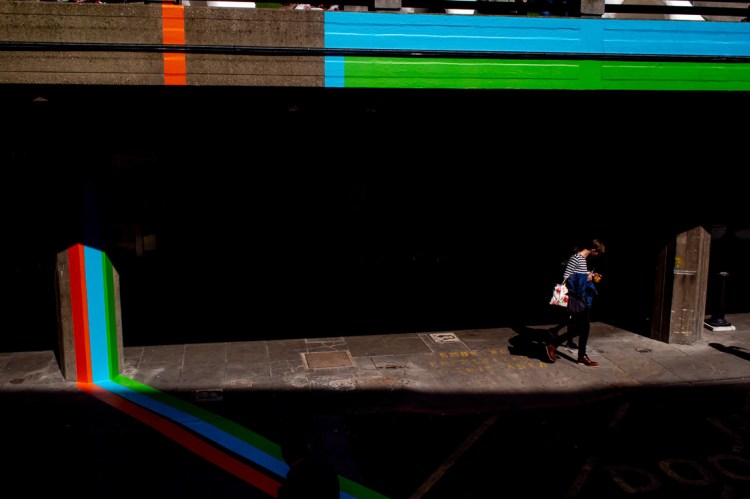
I know this is going to be controversial some, but a random silhouetted person passing through some nice light of an urban landscape, isn’t street photography for me.
If they in themselves are not important – in other words it could be any random person – they are merely a decorative compositional element in what is urban landscape photography rather than street photography.
And let’s be honest, a random walking silhouette isn’t that interesting – well not for me anyway. Not to say I’ve not done it myself way back, as in the above image from 2013, but I think I was channelling some inner colourful Harry Grueyaert vibe at the time. And at least the person isn’t an anonymous silhouette!
Just calling it “fine art street photography” doesn’t make it so.
It Doesn’t Have to Be on the Street

Despite the name, street photography isn’t confined to actual streets. Any public space is fair game. Parks, buses, supermarkets, piers, laundrettes, chip shops and even rural fields in deepest Somerset —anywhere people exist, wander, daydream, or interact with the world around them.
One of the problems with street photography is people take it as a literal interpretation. As has been suggested previously, it’s much more a tradition and a philosophy – even a certain aesthetic – than what the words may imply at first glance.
As I now live in the seaside town of Weston-super-Mare (see my This Is Weston-super-Mare series), a lot of my street photography happens away from urban streets and instead on the beach. Tony Ray-Jones, renowned for his candid depictions of English life, once remarked on the significance of the seaside in British culture. He observed that while Americans had Fifth Avenue, for the British, the beach was the stage where life unfolded. So who am I to disagree with that.
It Has to Be Candid
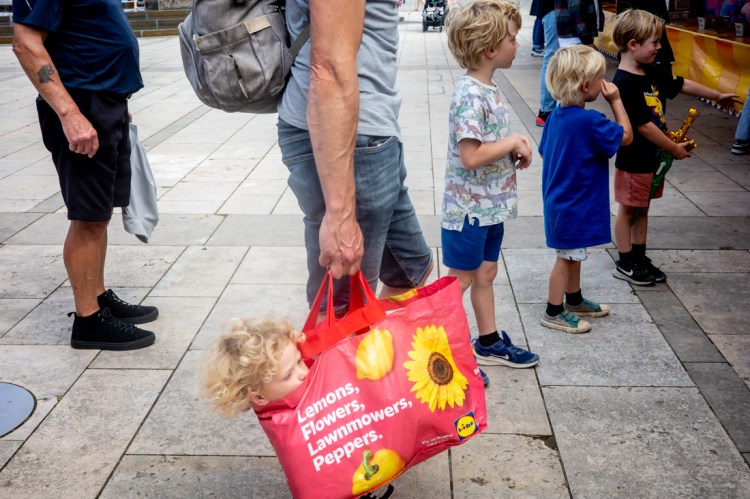
For me, most importantly, street photography has to be completely candid. No directing. No asking. No staging. That interaction, that brief acknowledgment, changes everything. The moment someone knows they’re being photographed, the spell is broken. The natural rhythm of life gets replaced by performance.
I’m not interested in that. I want the unscripted, the unaware, the honest and unfiltered seconds when life simply happens…irrespective of me.
No Flash, No Interference
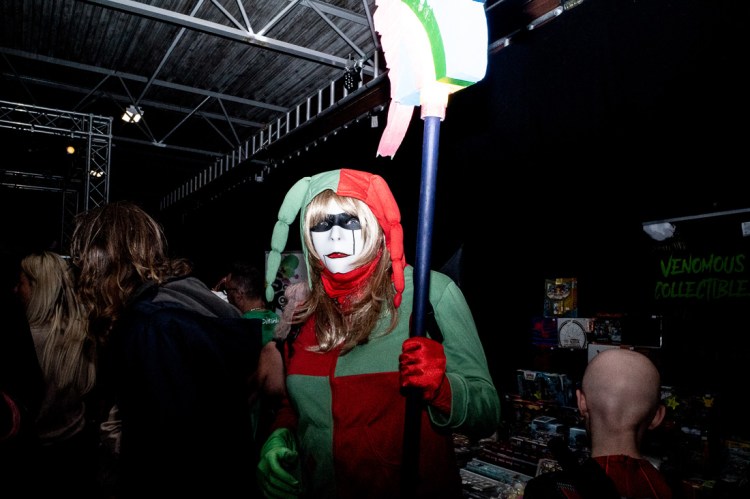
I don’t use flash on the street. I’m not Bruce Gilden. As bold and iconic as that style is, it’s not mine.
Flash turns a naturally occurring moment into something created by the photographer. It becomes a performance, a reaction to the intrusion of light and presence. That’s not what I’m looking for.
I want to document what would have happened whether I was there or not. A street moment, for me, is one that exists independently of the photographer. I’m just lucky enough to be there to catch it—without shaping it.
I tried it once, at an event, but quickly realised it wasn’t for me.
Street Photography vs. Photography on the Street
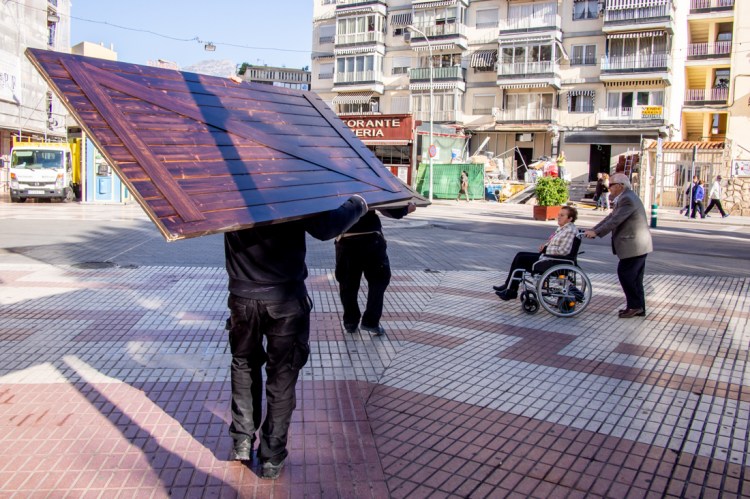
There’s also a distinction that’s often overlooked, and anyone who knows me knows I bang on about it all time: not every photo taken on the street is street photography.
Street photography is a tradition—an approach, a mindset, a philosophy. It’s rooted in observation, patience, and story. I’m looking for something unusual, something funny, absurd or even surreal. Something that simply transcends the everyday for a hundredth of a second.
People just doing what you would normally expect to happen, like just randomly walking along a street, not doing anything out of the ordinary, is just photography taken on the street. It’s not street photography – and that seems to be the hardest thing for a lot of people to get their heads around.
Street Photography vs. Documentary Photography
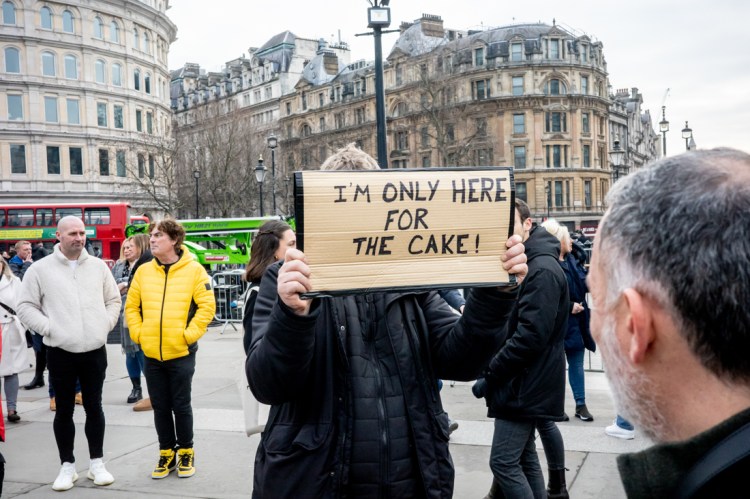
Street photography may have grown out of the documentary tradition, but they’re not the same.
Documentary photography is about facts—objective observation with the intent to inform, explain, and answer.
Street photography is something more slippery. It’s subjective. It’s emotional. It doesn’t give answers—it asks questions. Meaning in a street photo is always shaped (and skewed) by the photographer. There’s no obligation to be neutral or to tell the whole story—just to capture a fragment of it, and let the viewer bring their own interpretation.
The Snapshot Aesthetic Over Perfection
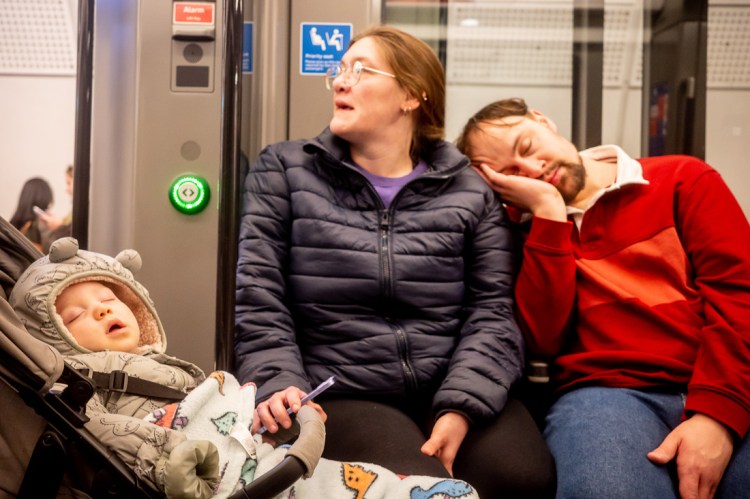
I’ve never chased technical perfection. A great street photo doesn’t need to be sharp edge-to-edge or perfectly exposed. In fact, I prefer it when things feel a bit off. That split-second blur, that awkward crop, the chaos in the frame—that’s where the truth is.
My approach is rooted in a snapshot aesthetic. It’s raw. It’s instinctive. It’s about reacting, not overthinking. Because life doesn’t pause and line itself up just right. It’s messy, unpredictable, full of motion and noise. That’s exactly what I want my images to feel like.
A little imperfection in the frame can say more than a flawless composition ever could. After all, most compositional rules were created by Renaissance artists for paintings – not snapshots created at hundredths of a second on a mechanical device.
WTF, Absurdity & That One Good Shot
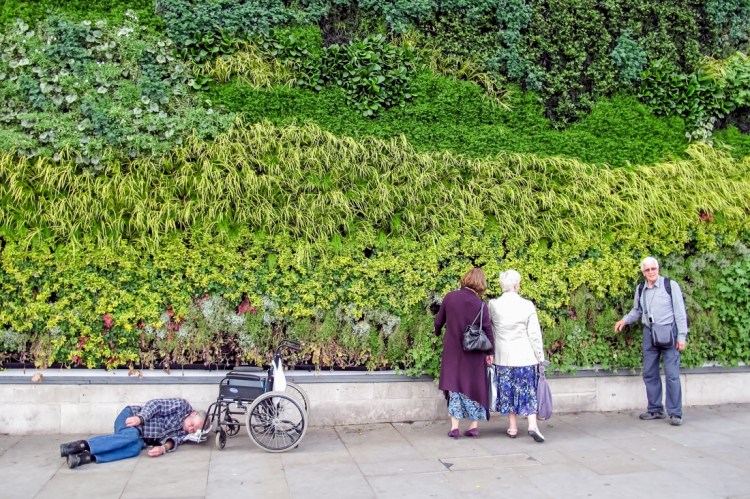
I’m drawn to the odd and the offbeat. The absurd. The moments that make you go, “WTF just happened?” Those are gold. They might be funny, uncomfortable, poetic—or all three at once.
But here’s the truth street photographers rarely say out loud: it’s tough. Brutally tough. You can shoot thousands of frames and walk away with nothing. Or almost nothing. A good shot—truly good—might happen a handful of times a year. And that’s if you’re lucky and relentless.
But when it does happen, it’s magic. Not because the composition is perfect or the lighting is just right. But because you caught something real and strange and beautiful that no one else saw. That’s the rush. That’s the addiction.
The Photographers Who Shaped Me
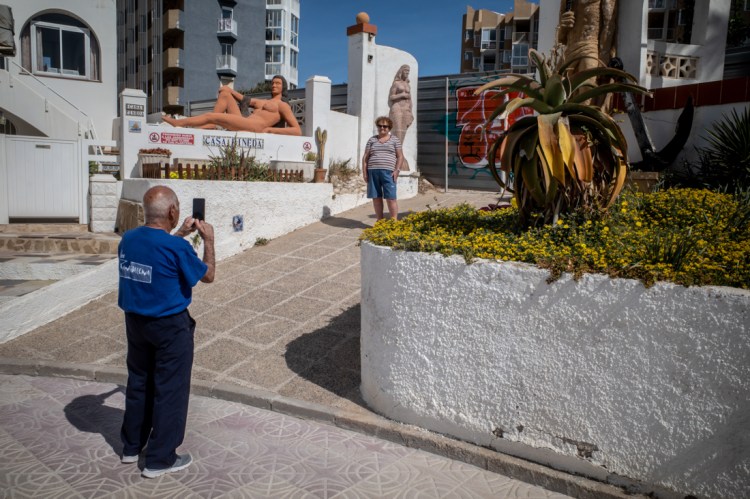
I didn’t get here in a vacuum. I’ve been shaped by the work of photographers who understood that street photography is about life—not just aesthetics.
Garry Winogrand’s chaotic energy. Tony Ray-Jones’ strange, very British humour. Robert Frank’s raw, poetic honesty. Richard Kalvar’s timing and humour. Jeff Mermelstein’s weirdness. Joel Meyerowitz’s colour and flow. Martin Parr’s deadpan absurdity.
Each of them helped me realise that the best street photography doesn’t shout—it whispers something strange and unforgettable.
Why I Do It
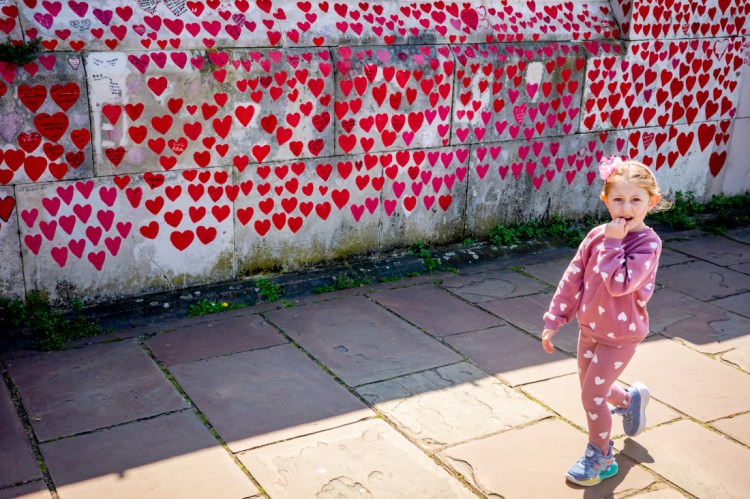
Street photography gives me a reason to look at the world closely. To wander, to observe, to connect. It teaches patience, humility, and resilience. It keeps me curious. And not to mention, healthier than I may ordinarily have been.
So, what is street photography to me? It’s the endless search for those rare, unscripted moments that tell the truth—whether that truth is sad, hilarious, weird, or wonderfully human.
And I wouldn’t have it any other way. So do you agree or not agree? What is street photography to you? Does it differ from what I’ve said? I’d love to hear…so do drop a comment below.
To receive updates and latest news direct to your inbox, please subscribe below. Thanks.
Discover more from That Darren Lehane
Subscribe to get the latest posts sent to your email.
 That Darren Lehane
6 thoughts on “What Is Street Photography…To Me?”